
Identify the immediate concern first
After a storm in Plano, an active leak and a damaged-looking shingle are not the same scheduling question. Explain whether water is currently entering, whether a ceiling is sagging, and whether water is near electrical equipment. Those details help a professional assess the situation without asking you to investigate on the roof.
Keep people away from unstable areas, downed lines and electrical hazards. Do not walk a wet or damaged roof or attempt a temporary covering yourself. Ground-level photographs and observations from safe interior areas are enough to begin the conversation.
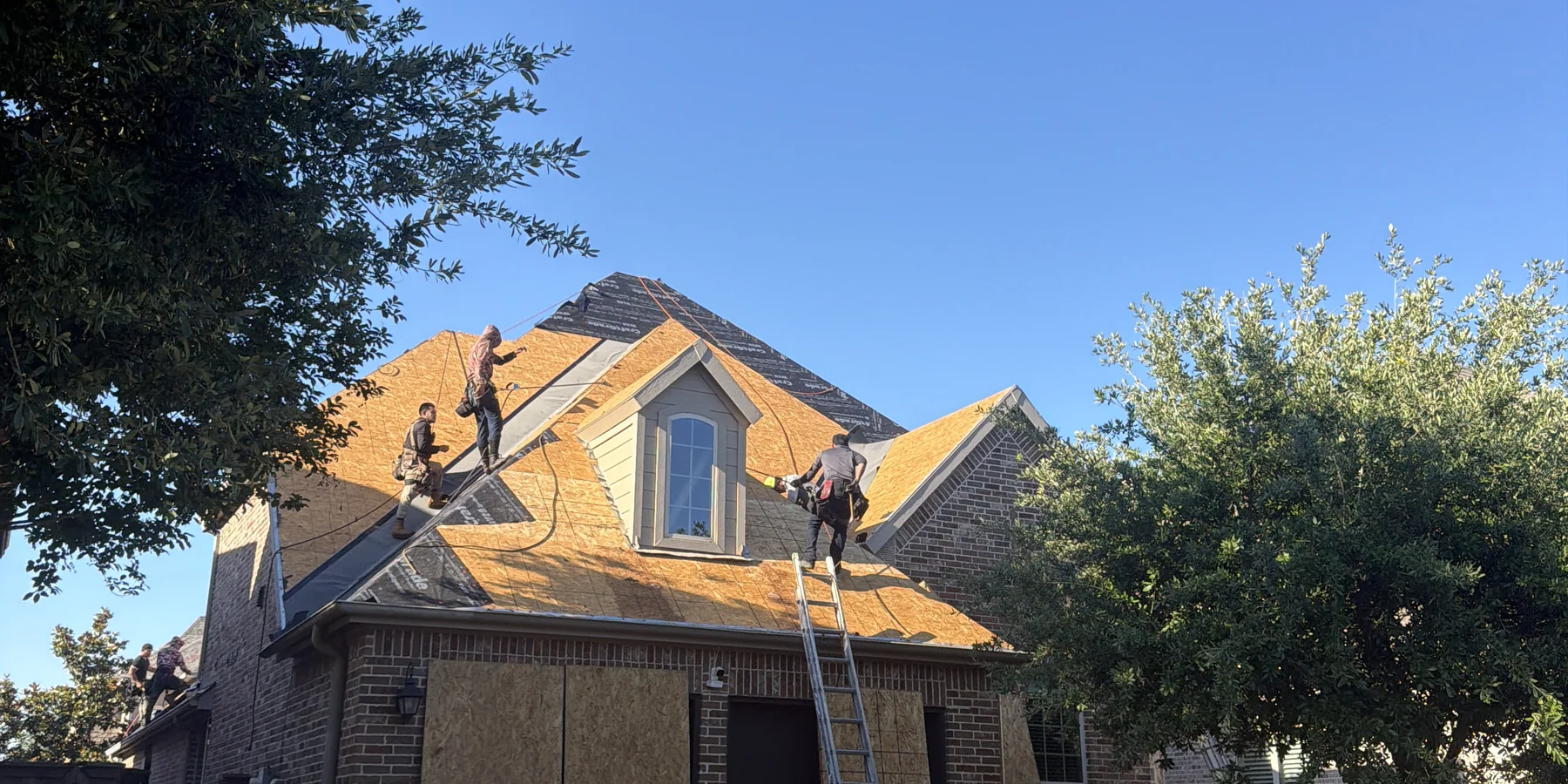
Define what temporary protection is intended to do
Temporary protection may limit further water entry while access, weather or the full repair scope is being assessed. It is not a substitute for diagnosing the damaged assembly. Ask which area is being protected, what the temporary work includes and what limitations remain.
Keep its date, photographs and invoice separate from the permanent proposal. If part of the roof could not be examined, that should remain an open item in the record. A covered opening does not establish that nearby flashing, decking or other affected areas have been repaired.
Use the inspection to connect conditions to work
Once an inspection can proceed safely, ask for the findings by identifiable roof area or component. A visible interior stain may be away from the exterior opening. The explanation should trace the concern to the observed roof condition rather than select work solely from the room where water appeared.
Hail marks, displaced materials and existing wear may lead to different recommendations. Request a distinction between confirmed observations, possible causes and concealed conditions. Ask what further examination is needed when the initial visit cannot resolve an uncertainty.
Choose the permanent scope from the findings
A localized defect may support a focused repair when surrounding materials and the connection can remain serviceable. A broader recommendation needs an explanation of the wider condition and what a limited repair would leave unresolved. Neither the occurrence of a storm nor roof age alone requires replacement.
The proposal should state the repair boundary, components to remove or retain, and how the work reconnects to the existing roof. If additional damage becomes visible after opening the area, agree on documentation and approval before expanding the scope.
- Identify which concern the permanent work is intended to resolve.
- List any areas that remain outside the proposal.
- Ask how the temporary covering will be handled as permanent work proceeds.
- Clarify who will communicate weather or access changes affecting the return visit.
Keep responsibility and timing clear
Temporary protection, roof repair and any separate interior restoration should have clear boundaries. Ask which party is responsible for each open item and what must happen before the next stage can begin. A single phone conversation is not a written completion commitment.
Availability, weather, access and materials affect the plan. Obtain the actual scheduling conditions for the work rather than relying on a standard duration in an article. Keep proposed changes and agreed dates with the current scope.
Close the record when the agreed work is complete
Compare completion photographs and paperwork with the permanent proposal and approved changes. Ask what remains to be monitored or handled separately, and retain the written terms for a later concern. Removing a temporary covering alone is not a closeout record.
Frame Restoration documents the observed roof conditions and prepares a written construction scope your carrier can review. The carrier determines coverage. We document, we don't adjust — regulated adjusting work stays with properly authorized professionals. Construction documentation does not promise an insurance outcome.
Discuss your Plano roof concern
Share the concern and any records you already have. Inspection scheduling depends on conditions and availability.
Related resources
- Storm and Hail Damage Repair service overview — full Frame Restoration Storm and Hail Damage Repair service page with process, materials, and FAQ.
- roofing contractor services in Plano — every service we offer in Plano on one page.
Plano questions about this guide
Does installing a tarp complete the storm repair?
No. Temporary protection and permanent repair serve different purposes. Keep the protected area, limitations and remaining inspection or repair work clearly identified in the record.
What should I tell the contractor when water is entering?
Describe the visible location, whether entry is continuing, and any sagging ceiling or nearby electrical hazard. Stay clear of unsafe areas and do not climb onto the roof to find the opening.
Does storm damage always require replacing the roof?
No. The recommendation should follow the affected components, extent of damage and condition of the surrounding roof. Ask what a limited repair would resolve and why a broader scope is proposed if needed.
What should be clear before the permanent work starts?
Confirm the repair boundary, included components, handling of concealed damage, scheduling conditions and any work left to another party. Keep temporary-protection records separate from the final repair scope.